Why Speech Therapy Isn’t Just About Sounds: Understanding the How Behind Your Child’s Speech

If your child has a speech sound disorder, you may have heard things like:
“They know the sound, but they can’t say it clearly,” or
“They’ve been in speech therapy for a while, but progress feels slow.”
If that sounds familiar, you are not alone—and there is a reason this happens for some children.
New research, including work coming out of the University of Toronto, is helping speech therapists better understand why some children struggle with speech sounds and how therapy can be more effective when we look beyond just what we hear.
Speech Is More Than Knowing Sounds
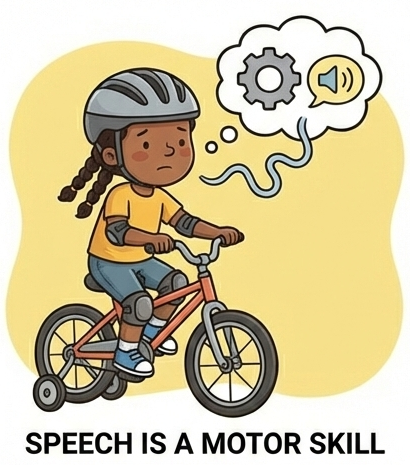
Speech is not only about learning letters or sounds. It is also a motor skill.
Just like learning to ride a bike or tie shoes, speech requires the brain and body to work together. Your child’s jaw, lips, and tongue must move in very precise ways—and in the right timing—to make clear speech.
Some children know exactly what they want to say, but their speech muscles are still learning how to move smoothly and consistently. When that happens, speech may sound unclear even though the child understands language well.
Why Some Children Need a Different Approach
Many speech therapy approaches focus on practicing sounds over and over. For some children, this works beautifully. For others, it doesn’t—and that can feel frustrating for families.
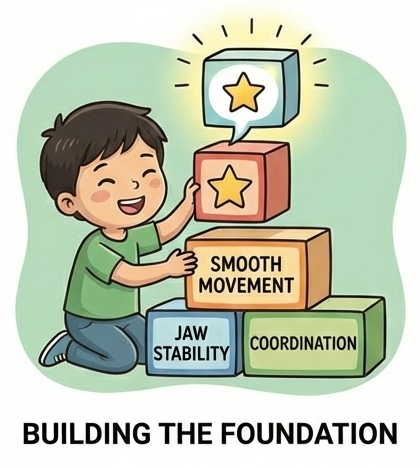
Research now shows that some children benefit more when therapy focuses on how speech movements happen, not just on repeating sounds.
These children may need support with:
Jaw stability and control
Tongue movement and coordination
Moving smoothly between sounds in words
Saying longer or more complex words without speech breaking down
When these motor pieces are strengthened, speech clarity often improves more naturally.
Why Progress Can Suddenly “Click”
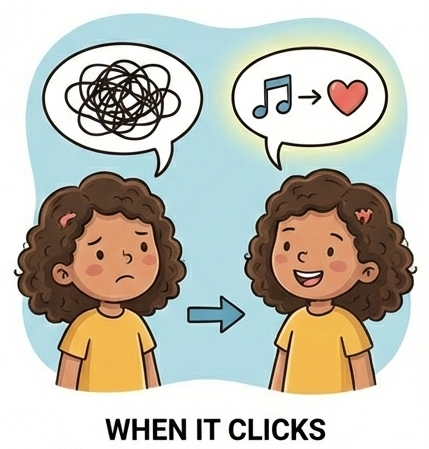
You may notice that once therapy targets the right foundation, your child’s speech suddenly starts to make sense more quickly. This isn’t because they weren’t trying before—it’s because their therapy finally matched how their speech system works.
This is why two children with similar-sounding speech difficulties may need very different therapy plans.
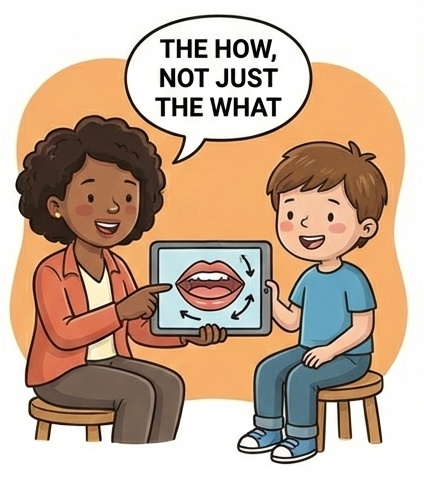
What This Means for Families at Brave Wings Therapy
At Brave Wings Therapy, we take time to understand how your child produces speech—not just what it sounds like. Our evaluations look at the building blocks of speech development so therapy can be:
More individualized
Less frustrating for your child
More effective over time
Our goal is always functional communication—helping your child feel confident, understood, and successful in everyday conversations.
A Message of Hope
If your child has been working hard and progress feels slow, it does not mean therapy has failed—and it certainly does not mean your child can’t improve. Sometimes it simply means the approach needs to shift.
Speech development is not one-size-fits-all, and neither is speech therapy.
We believe that when therapy meets a child where they are, growth follows—and we are honored to support families every step of the way.
If you have questions about your child’s speech or wonder whether a different approach might help, our team is always here to talk, listen, and guide you forward. Contact us today!