
OUR SERVICES
Occupational therapy that builds the motor, postural, and sensory foundations for daily function.
Our therapists address the core systems that allow children to sit upright, move efficiently, focus their attention, eat safely, and communicate with confidence.
We Can Help Support


Learn More
Why Families Choose Occupational Therapy at Brave Wings
✅ Whole-Body Foundations – Movement is the base for development. Postural control, motor coordination, sensory processing, and regulation directly impact breathing, attention, feeding, communication, self-help skills and safety. We build these foundations so skills are stable, efficient, and lasting.
✅ Neurologically-Informed, Hands-On Therapy – Our therapists use evidence-based to improve alignment, strength, motor planning, and functional movement patterns that support daily life.
✅ Collaborative, Integrated Care – When appropriate, OT works alongside speech and feeding therapy to ensure posture, movement, and regulation support communication and safe, efficient feeding.
Every plan is developed alongside speech and feeding therapists so progress builds naturally across eating, speaking, and breathing.

The Sensory Motor Gym at Brave Wings
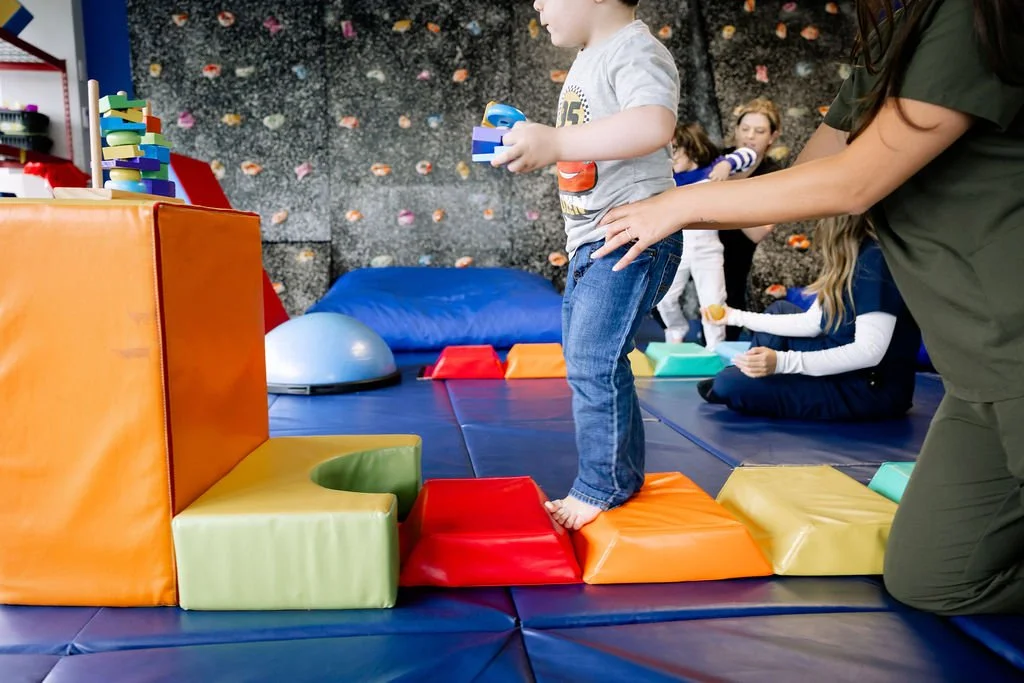
Our gym area is where children receive occupational therapy services, as well as sensory-integration speech therapy sessions. We have colorful equipment ranging from monkey bars, a slide, swings (hammock, platform, teardrop), yoga balls, balance beams, crash pads, river stones, and much more!
This room targets many different skills, including (but not limited to) gross motor, fine motor, strengthening, balance, and coordination.
Is Occupational Therapy Right for My Child?
Occupational therapy helps when the body’s foundation, posture, coordination, or sensory processing makes everyday tasks like eating, breathing, or focusing harder than they should be.
Our team looks at how these systems work together, so progress in speech and feeding therapy comes more naturally.
Your child might benefit from these therapies if they:
Tire easily while eating, speaking, or sitting upright
Seem “always on the move” or crave constant motion (sensory seeking)
Avoid messy textures, certain foods, or loud environments
Appear clumsy, off-balance, or have poor coordination
Have trouble focusing, transitioning, or calming down after activity
We share about occupational therapy on our Instagram!


